
Dola Purnima in Odisha is a highly devotional, multi-day affair centered on the village and community.
Key Dates for 2026
- Purnima Tithi Begins: March 2, 2026, at 5:55 PM.
- Purnima Tithi Ends: March 3, 2026, at 5:07 PM.
- Holi (Color play): March 4, 2026 (usually the day after the Purnima rituals).
Unique Odia Traditions
In Odisha, the festival often begins on Phagu Dashami (February 27, 2026). Here is what you can expect or participate in:
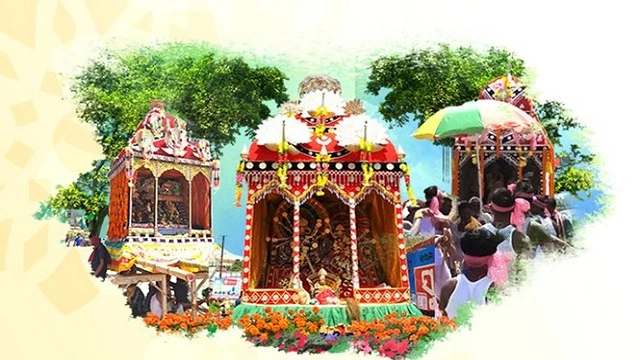
- The Biman Procession: The hallmark of the festival is the Biman—a miniature wooden temple or palanquin. Idols of Dolagovinda (Lord Krishna) and Radha are placed inside and carried on the shoulders of devotees through the streets.
- The “Melana”: This is a grand gathering of Bimans from several neighboring villages. They congregate at a large open field called the Melana Padia. If you are near the outskirts of Bhubaneswar or in the surrounding Puri district, these Melanas (like the famous Harihar Melana) are a sight to see with thousands of people and traditional music.
- Dola Bedi & Abir: Instead of liquid colors, the primary element is Abir (dry colored powder). It is first offered to the deities on the Dola Bedi (swing platform) before people apply it to each other’s foreheads as a blessing.
- Srimandir Rituals (Puri): At the Jagannath Temple, the deities are adorned in the Suna Besha (Golden Attire), specifically the Rajadhiraja Besha, which is a major event for pilgrims.
Festive Delicacies
If you’re planning a celebration at home or for your family, these are the traditional offerings:
- Panchamrit: A mixture of milk, curd, ghee, honey, and sugar.
- Odia Sweets: Chhena Poda, Arisa Pitha, and Malpua are central to the bhog.
Dola Purnima is special because it represents a distinct “Odia identity” that transforms the pan-Indian Holi festival into something deeply spiritual, community-driven, and agrarian. While the rest of India focuses on the “play of colors,” Odisha focuses on the “play of the Gods.”
Here is what makes it unique:
The “Gods on Vacation” (The Biman)
In most festivals, devotees go to the temple to see the God. During Dola, the God comes to the devotee.
- Idols of Radha and Krishna (known as Dolagovinda) leave the sanctum sanctorum and are carried in beautifully carved wooden palanquins called Bimans.
- These Bimans visit every house in the village. Families wait at their doorsteps to offer Bhog (prasad), making it a deeply personal interaction between the community and the divine.
The Dola Bedi (The Swing)
The festival is named after the Dola (swing). On the day of Purnima, the deities are placed on a special platform called the Dola Bedi.
- The ritual of swinging the idols symbolizes the change of seasons and the arrival of Spring.
- Devotees believe that a glimpse of the Lord on the swing cleanses one of all sins.
The New Year Connection (The Panji)
Dola Purnima marks a significant “reset” in the Odia calendar.
- The New Almanac: On this day, the new Odia Panji (almanac) is worshipped and read out for the first time.
- It is used to predict the weather, crop yields, and auspicious dates for the coming year, making it essential for the state’s agrarian economy.
The “Melana” (A Social Gathering)
Perhaps the most special social aspect is the Melana.
- Think of it as a “Regional Summit of Deities.” Bimans from 10, 50, or even 100 neighboring villages gather in a massive field.
- While it is a religious event, it functions as a massive trade fair and cultural festival, featuring everything from local handicrafts to the famous Odia Jatra (moving opera).
Fagun & Abira (Dry Colors)
While liquid colors (water balloons and buckets) are common in cities now, the “special” Odia tradition is Abira (dry powder).
- It is first applied to the feet of the deities and then used by people to greet elders by touching their feet.
- It carries a sense of “Aashirwad” (blessing) rather than just playful chaos.
For Dola Purnima 2026, the specific gatherings and entertainment schedules are shaping up to be quite vibrant. Here are the most relevant details for the Melanas and the Jatra (opera) circuit.
Harirajpur Panchu Dola Melana
- Key Date: March 8, 2026 (Panchu Dola is specifically the 5th day after Purnima).
- Location: Harirajpur (near Jatni), approx. 40 minutes from Bhubaneswar.
- Firework Timings: The legendary “Atasbaaji” (fireworks competition) usually begins late at night, typically between 1:00 AM and 3:00 AM.
- Note: This is a massive event. For a family visit, I recommend arriving by 7:00 PM to enjoy the Meena Bazaar and see the Bimans arrive before the heavy midnight crowds set in.
Kandhei Melana (Patrapada)
- Key Date: March 3–4, 2026.
- Location: Patrapada, near AIIMS Bhubaneswar.
- Highlight: This “Toy Fair” Melana is perfect for your daughter. While traditional Melanas focus on heavy wooden palanquins, this one features smaller dolls and toys. It has a much more child-friendly atmosphere with local artisans selling traditional clay and wooden toys.
Jatra (Opera) Schedule near Bhubaneswar
The Jatra season in 2026 is seeing a “clash of titans” among the top troupes. For March 2026, you can catch shows at the major Melana grounds (Harirajpur and Palasuni) and near the Khandagiri foothills:
| Troupe (Opera Party) | Popular Plays for 2026 | Locations (Tentative) |
| Konark Gananatya | Target Market themes / Family Drama | Palasuni / Rasulgarh |
| Sanket Jatra Party | Historical & Social Satire | Harirajpur Ground |
| Eastern Blue | Modern Romance/Action | Near Khandagiri |
| Kalinga Gananatya | Traditional Folk Stories | Jatni / Harirajpur |
Pro-Tip for Ad Ops/Marketing Pros: If you visit the Jatra grounds, notice the massive physical hoarding and branding strategy used by these troupes. It’s a masterclass in local “offline” marketing that still outperforms digital in rural and semi-urban Odisha.
Local Bhubaneswar “Melanis”
If you don’t want to travel far, the Palasuni Melana and the Unit-1/Unit-9 gatherings are the most central.
Dudha Melani (March 12, 2026): This is the symbolic “farewell” ritual for the deities that happens a few days later, often near the Bindu Sagar tank.
Dola Purnima (March 3): Bimans from different “Sahis” (streets) of Old Town and Saheed Nagar will congregate at local temples.
In the Patrapada and Bhagabanpur areas of Bhubaneswar, the Kandhei Melana (Meeting of Dolls) is a unique cultural gathering where the spotlight belongs entirely to children. Unlike traditional Melanas where deities are carried in palanquins, here children take charge, parading their own dolls and toys in a miniature version of the Dola Jatra festival.
The specific handicrafts and traditional toys that make this event a favorite for kids include:
Traditional Odia Dolls & Toys
The fair celebrates the “Kandhei” (doll) culture of Odisha, featuring a mix of ancient craftsmanship and modern playthings:
- Clay and Terracotta Dolls: Hand-molded dolls made from river clay, often painted with vibrant natural or water colors. These range from simple human figurines to mythological characters.+1
- Jau Kandhei (Lacquer Dolls): Though primarily associated with Balasore, these brightly colored dolls are legendary in Odisha. They are made of fired clay or wood and finished with a shiny coating of lac (resin). They often come in pairs (bride and groom) and are intricately decorated with geometric patterns and floral motifs.+2
- Papier-Mâché Toys: Light and durable masks and animal figures (like lions, elephants, and tigers) made from layers of paper and clay, painted with bold colors.
- Wooden Figurines: Simplistic, hand-carved wooden toys made from light wood like Poniki or Ivory wood, often depicting rural life or animals.
The “Kandhei Bimana” (Doll Palanquins)
A major highlight for children is not just the toys, but how they are presented.
- Miniature Palanquins: Kids carry their dolls in small, beautifully decorated palanquins called Bimanas. These are scaled-down versions of the ones used for deities, adorned with colorful fabrics, marigold garlands, and paper decorations.
- The Procession: Children from neighboring villages like Tamando and Janla join the procession with their “toy palanquins,” treating their dolls with the same reverence elders show to idols.
Entertainment and the “Kandhei Opera”
The gathering is essentially a “children’s fair,” which adds to its charm:
- Doll Operas (Kandhei Jatra): In recent years, organizers have invited traditional string puppet shows or doll operas to perform. These shows bring stories from the Ramayana and Mahabharata to life using handcrafted puppets, captivating the young audience.
- Local Bazaar: A sprawling market set up at the Bhagabanpur ground offers a variety of affordable “mela toys”—everything from handmade whistles and flutes to wooden tricycles and clay kitchen sets (handi-sala).
Cultural Roots
The event is tied to the local deity, Maa Choti Bhuasuni. Legend says the festival started when village kids began imitating the elders’ Dola Melana because their own village didn’t have one. Today, it is organized on the 21st day of the Dola festival (around late March/early April) and serves as a vital platform for keeping traditional Odia toy-making alive in an era of plastic and digital games.

Pingback: Kohinoor Odia Calendar 2026: Complete Digital Guide